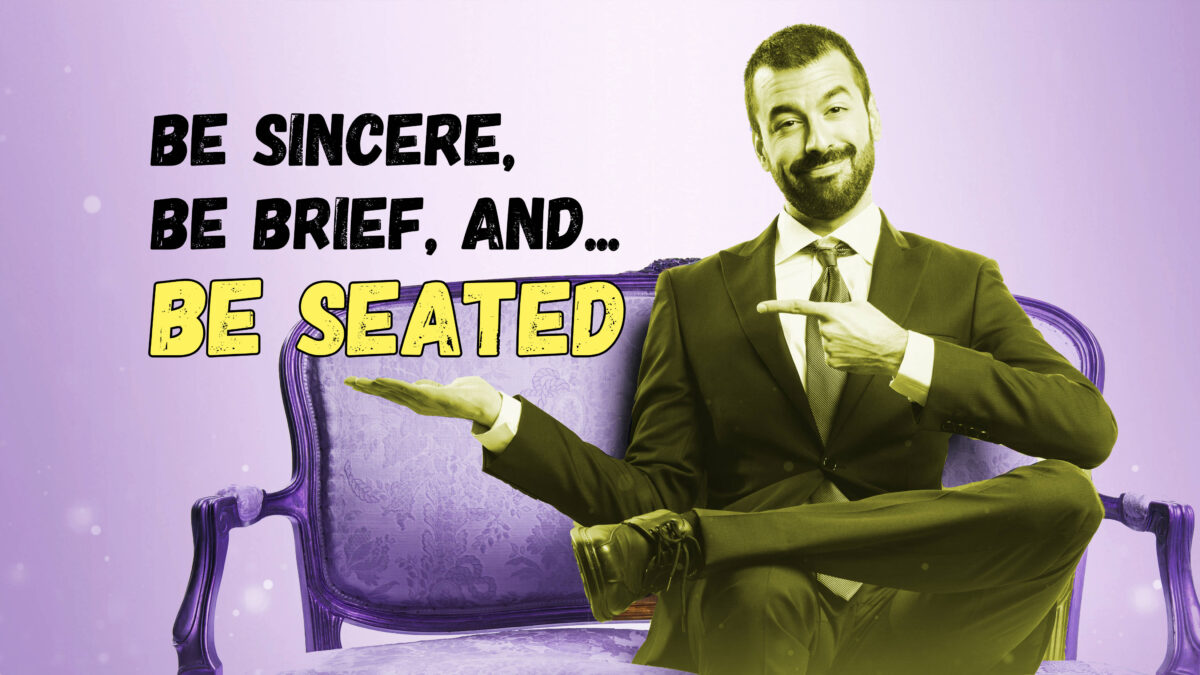
Be sincere, be brief…and be seated.
“Be sincere, be brief, be seated” – so advised Franklin Delano Roosevelt, the 32nd President of the United States, when it came to public speaking.
Although the advice dates back to the early 1900s, it is more valid than ever in our day and age. How many useless meetings, endless presentations, and lengthy emails plague our daily lives?
Roosevelt’s advice invites us to reflect on the superfluous words we use to appear suitable, convince someone, or be cool.
The opposite is true: good people say what they need to say, concisely, and then disappear.
Be sincere
The audience (whether it’s one person or thousands) always notices whether you believe in what you say or not. They immediately catch a speaker who puts energy and courage into their words and reveals their passion for an idea. Sincerity always pays off. If you don’t believe in what you’re saying, have someone else present it.
Be brief
Take the time you need to say what you want, but not a minute more. All ideas, even the most complex ones, can be explained in 10 minutes. There’s no need to go into details; your first task is to attract the audience’s attention, intrigue them, and fascinate them with your idea. Details can come later. If you need more than 20 minutes, it means you haven’t prepared enough or you haven’t been able to distill the essence of your idea.
… and then sit down
It’s not just a physical piece of advice, but also psychological. Once you’ve presented your idea, relax and listen to what your audience has to say. Leave space for your words to have an effect and listen to any objections, perplexities, or enthusiasm you’ve generated.
Only in this way can the presentation turn into a conversation and be effective.



Lascia un commento